Best Down Jackets For Hiking Of 2026
Looking for the best down jackets for hiking in 2026? We’ve rounded up my favorite trail-tested picks for lightweight warmth, packability, durability, and dependable performance in the outdoors.
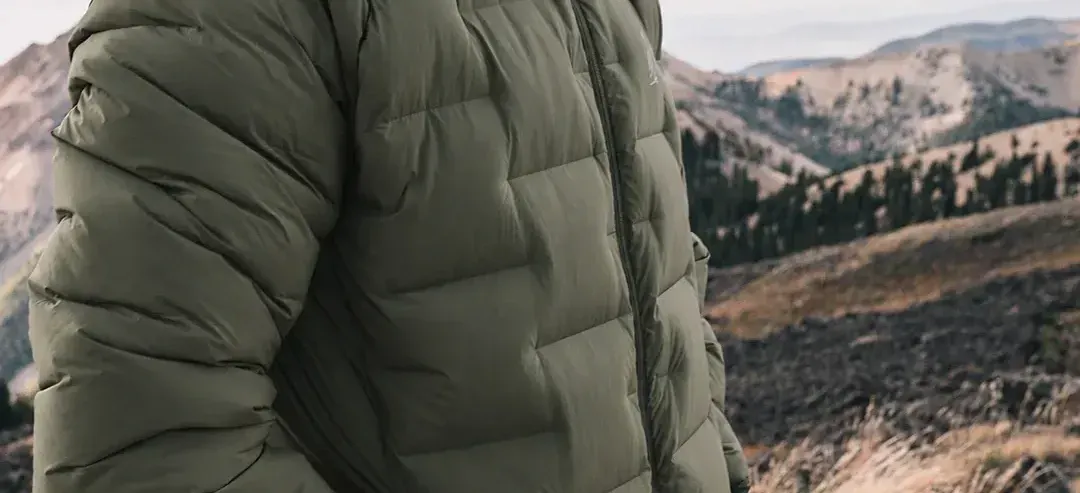
When you’re hiking through changing temperatures, wind, and unpredictable mountain weather, a good down jacket is one of the most useful layers you can carry. Down offers an incredible warmth-to-weight ratio, packs down small in your backpack, and provides serious insulation without the bulk of heavier cold-weather layers. But not every puffy is equally suited to life on the trail. The best down jackets for hiking balance warmth, weight, packability, durability, and comfort while still holding up to the realities of outdoor use.
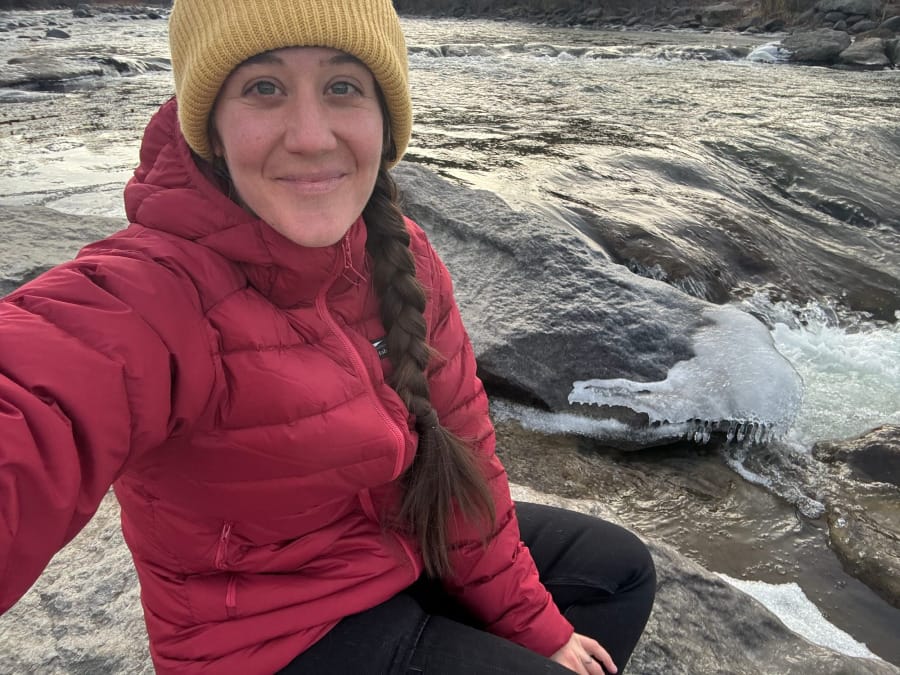
For this guide, I’ve rounded up my picks for the best down jackets for hiking in 2026, with an emphasis on jackets I’ve personally worn, tested, and relied on outdoors. I’m also prioritizing companies using responsibly sourced down and more thoughtful materials and manufacturing practices wherever possible. Whether you need an ultralight puffy for cool mornings, a dependable insulating layer for high-elevation hiking, or something substantially warmer for winter adventures, there’s an option here for you.
Check Out the Best Down Jackets for Hiking in 2026!
Fjällräven Bergtagen Down Jacket
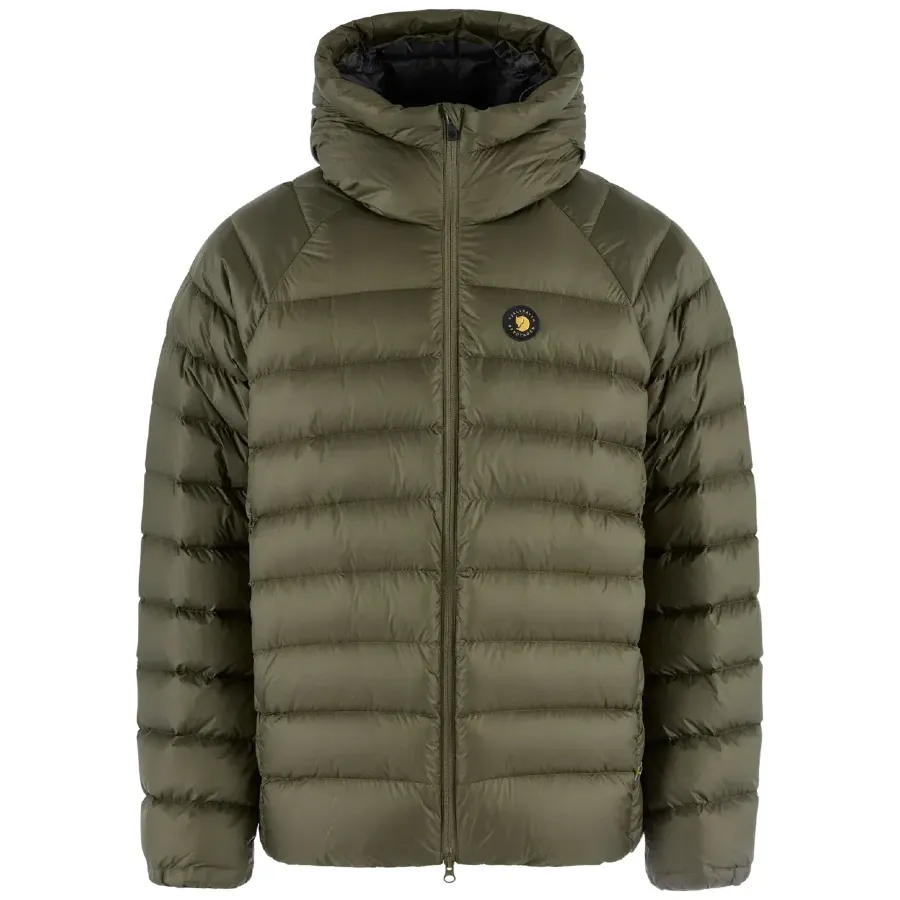
The Fjällräven Bergtagen Down Jacket is our pick for the best overall down jacket for hiking in 2026, especially for hikers who want serious cold-weather performance without crossing all the way into expedition-parka territory. Part of Fjällräven’s technical Bergtagen mountaineering collection, this is the kind of down jacket I reach for when temperatures are legitimately cold and I want insulation I can trust for winter hiking, high elevations, long stops, and exposed mountain conditions. It feels substantial and protective rather than like an ultralight puffy you’re constantly worried about babying, while still being designed specifically for active mountain use.
One of the reasons Fjällräven remains such a strong choice for down insulation is its approach to sourcing: the company uses 100% traceable, ethically sourced down throughout its down jackets. That pairs nicely with what I want from a premium hiking jacket; excellent warmth and thoughtful construction, but also greater transparency about where the insulation comes from. At $650, the Bergtagen is unquestionably an investment, but for hikers spending real time in cold mountain environments, it’s a beautifully built piece intended for considerably more demanding conditions than your average lightweight puffy.
Best for: Cold-weather hiking, winter adventures, high elevations, and mountaineering
Why We love it: Serious warmth, mountain-ready construction, and traceable down
Katabatic Gear Tincup Down Jacket
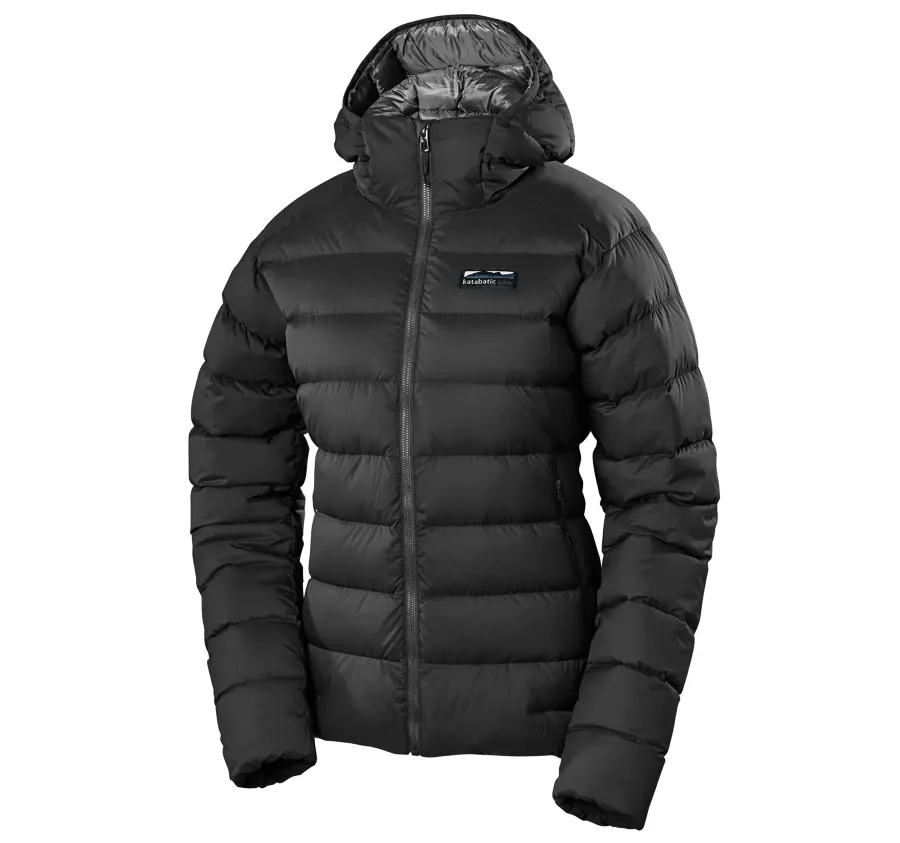
The Katabatic Gear Tincup Down Jacket is an especially good pick for hikers who want serious warmth without carrying a heavy winter puffy. Katabatic uses 850+ fill-power ExpeDRY hydrophobic down, with an impressive amount of insulation for the jacket’s overall weight. The women’s medium, for example, contains 5 ounces of down while weighing just 11.7 ounces total; the men’s medium has 5.6 ounces of down at 12.7 ounces. That makes the Tincup particularly appealing for cold-weather hiking and backpacking where every ounce still matters.
I also really like the details Katabatic has built around that insulation. The 20-denier recycled Pertex Quantum Eco shell has a DWR finish, while box-wall construction across the hood and shoulders eliminates external stitch lines in those areas to improve heat retention and weather resistance. You also get an adjustable hood, drop-tail hem, zippered hand pockets, internal drop-in pockets, and a fit designed to accommodate baselayers and midlayers. The down is RDS-certified, and Katabatic says its supplier is certified through both the Responsible Down Standard and bluesign programs. For hikers who prioritize warmth-to-weight performance but want something more substantial than the typical minimalist ultralight puffy, the Tincup hits a really nice sweet spot.
Best for: Ultralight backpacking, cold-weather hiking, high elevations, and hikers who run cold
Why We love it: Excellent fill-to-weight ratio, 850+ hydrophobic down, and thoughtful cold-weather construction
REI Co-op 650 Down Jacket
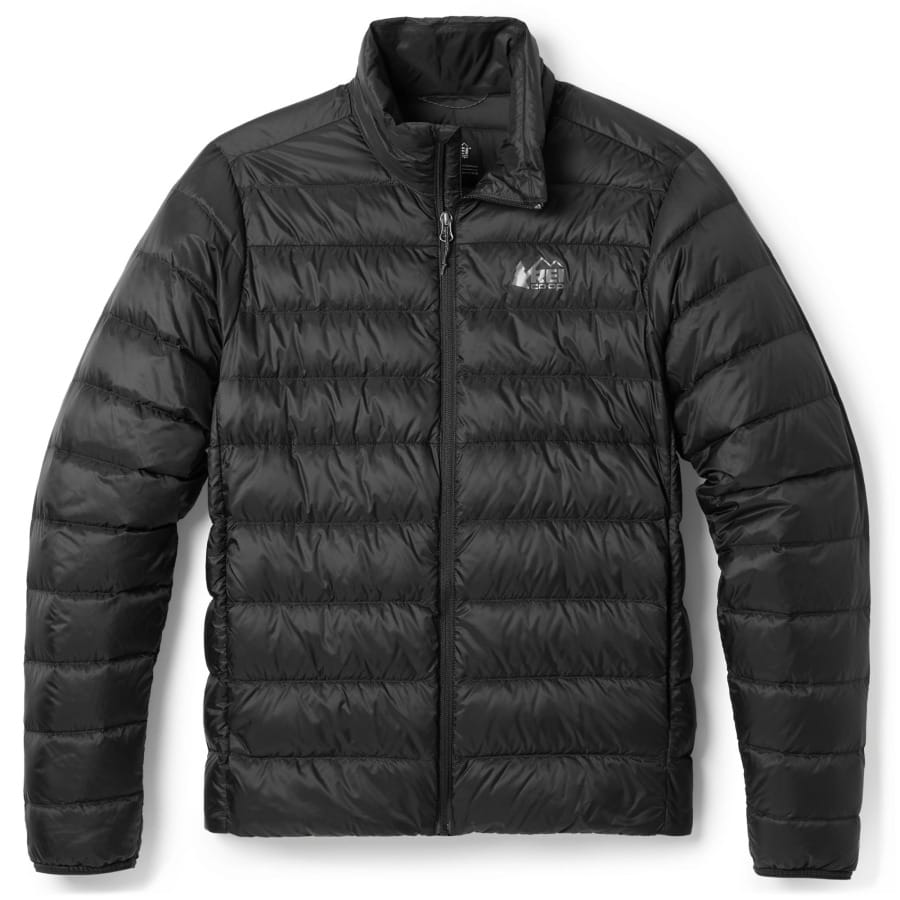
The REI Co-op 650 Down Jacket proves you don’t need to spend several hundred dollars to get a solid down layer for hiking. At $129, it uses 650-fill-power down to provide lightweight warmth for cool-weather adventures, while the women’s version weighs just 10.2 ounces and the men’s 10.9 ounces. The recycled nylon shell is windproof and water-resistant, with a PFAS-free DWR treatment to help shed light moisture. You also get zippered hand pockets, roomy interior drop-in pockets, and a hem drawcord for sealing out cold air.
This isn't the jacket we’d choose when maximizing warmth-to-weight is the priority, the 650-fill insulation simply can't compete with premium 800- or 900-fill options in that department. But that's also not really the point. For everyday hiking, cool mornings, travel, layering, and hikers who want a dependable puffy without the premium price tag, the REI 650 offers a ton of practical value. It's exactly the kind of jacket that can live in your hiking pack all season without requiring a major investment.
Best for: Budget-conscious hikers, everyday hiking, travel, and cool-weather layering
Why We love it: Affordable, lightweight, simple, and genuinely useful
Black Diamond Deploy Down 1.0 Hoody
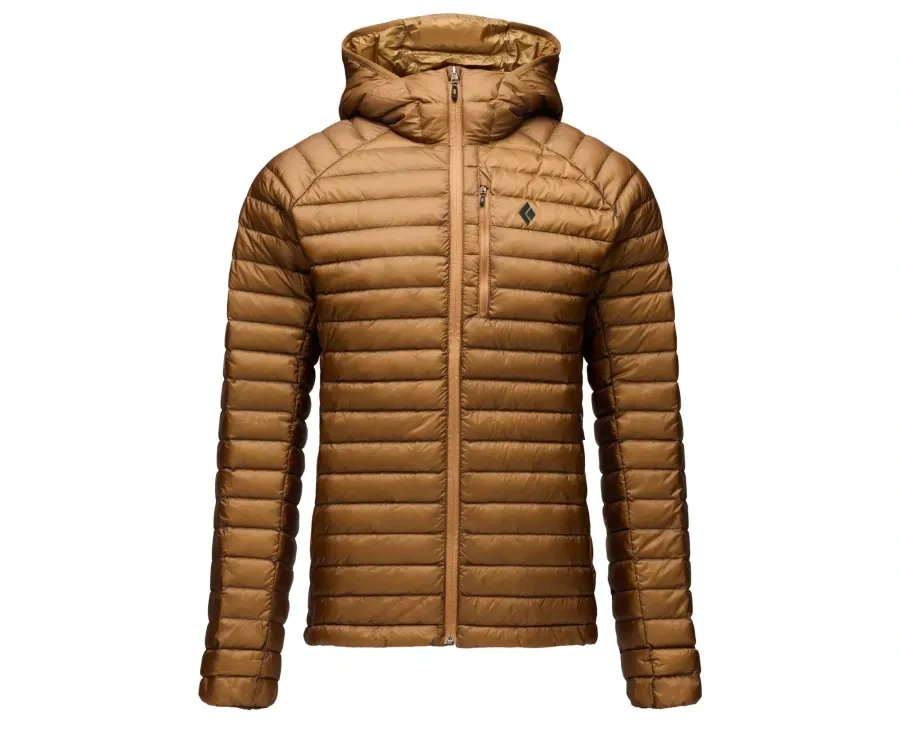
The Black Diamond Deploy Down 1.0 Hoody is built for hikers and mountain athletes who want a legitimately warm insulating layer without adding unnecessary weight or bulk to their pack. It uses 800-fill HyperDRY goose down, with 3.9 ounces of down in the men’s version, wrapped in an ultralight 10D/7D nylon shell. At just 304 grams (10.7 ounces) for the men’s and 285 grams (10.1 ounces) for the women’s version, it delivers an excellent combination of warmth, low weight, and packability. The HyperDRY treatment also gives the down additional resistance to moisture, making this a particularly useful puffy for unpredictable mountain conditions.
Black Diamond clearly designed this one with technical mountain use in mind. The slim fit layers easily beneath a shell, the insulated hood has a simple single-pull adjustment, and you get two zippered hand pockets plus a zippered chest pocket. When you don’t need it, the entire jacket stuffs into a pocket and includes a carabiner clip loop. I especially like the Deploy for high-elevation hiking, alpine adventures, and fast-and-light days when I want meaningful insulation but absolutely don't want a bulky puffy taking over my pack.
Best for: Fast-and-light hiking, alpine adventures, high elevations, and technical mountain use
Why We love it: Excellent warmth-to-weight, hydrophobic 800-fill down, and exceptional packability
Arc’teryx Cerium Hoody
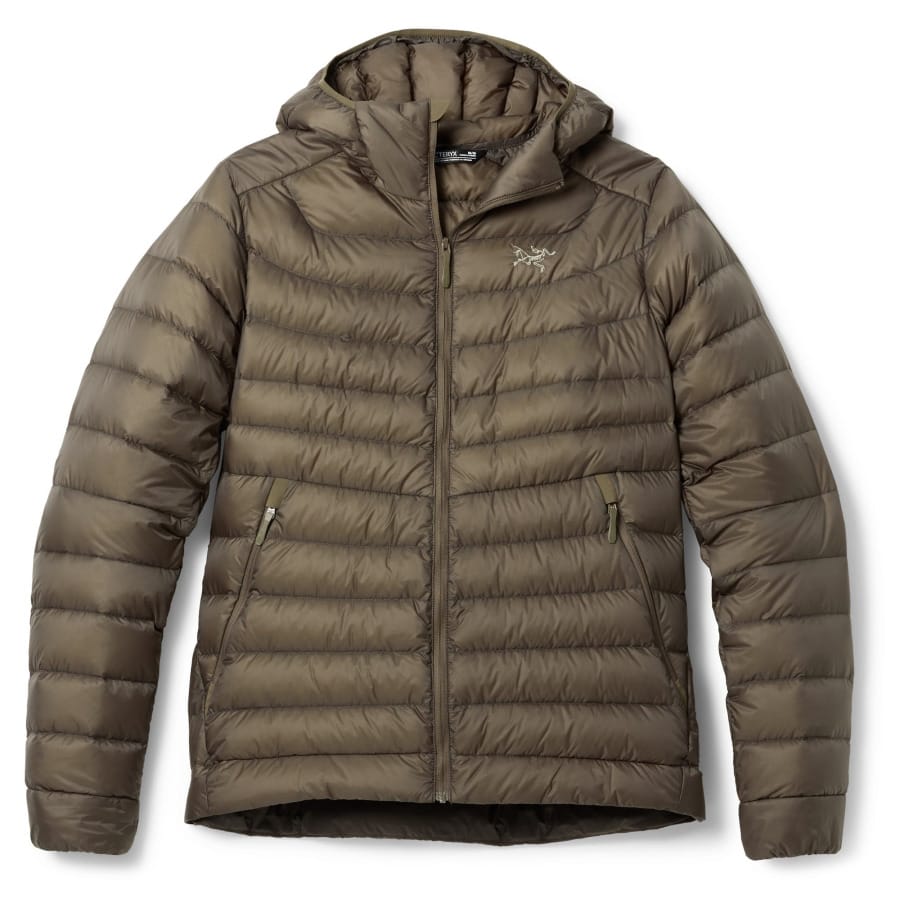
The Arc’teryx Cerium Hoody is one of those premium puffies that manages to be exceptionally light and packable without feeling stripped down. It uses responsibly sourced 850-fill European white goose down, paired with Coreloft synthetic insulation in areas more prone to moisture. Arc’teryx calls this Down Composite Mapping, and it’s a smart approach for hiking: you get the excellent warmth-to-weight ratio of high-quality down where it matters most, with synthetic insulation strategically placed where sweat and moisture are more likely to become an issue. The current Cerium also uses a recycled 15D Arato nylon shell with an FC0 DWR treatment.
At 10.2 ounces for the women’s version and 11.9 ounces for the men’s, the Cerium is an excellent jacket to keep tucked into your pack for high-elevation hikes, chilly summit stops, cold mornings, and other adventures where you want substantial warmth without carrying much weight. It packs into its included stuff sack, has an insulated StormHood, and its fitted profile makes it especially easy to layer beneath a shell. This is undeniably an expensive down jacket, but for hikers willing to pay for excellent materials, thoughtful construction, and a genuinely impressive warmth-to-weight ratio, the Cerium remains one of the strongest premium options for 2026.
Best for: High-elevation hiking, alpine adventures, lightweight layering, and hikers wanting a premium all-around puffy
Why We love it: 850-fill down, strategic synthetic insulation, excellent packability, and a beautifully streamlined fit
Rab Microlight Windstopper Down Jacket
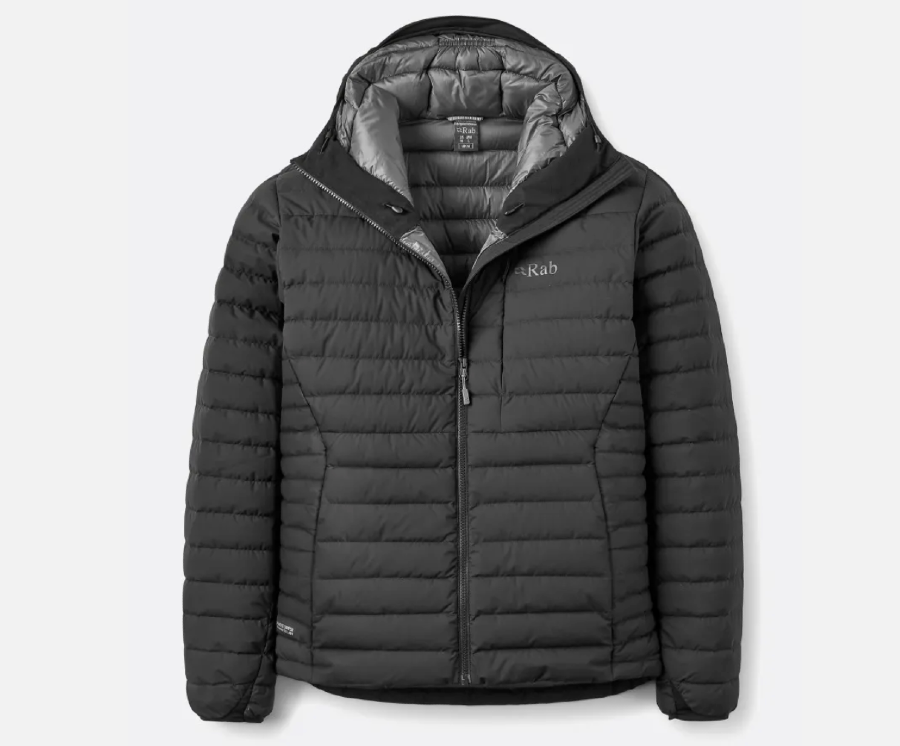
The Rab Microlight Windstopper Down Jacket is our pick for hikers who regularly deal with cold, exposed, and seriously windy conditions. What sets this version of the Microlight apart is its WINDSTOPPER fabric by GORE-TEX LABS, which gives the jacket considerably more protection from biting wind than a traditional lightweight down puffy. Rab pairs that protective exterior with hydrophobic down insulation, creating a warm and weather-resistant layer that makes a ton of sense for winter hiking, exposed ridgelines, cold summit stops, and generally nasty mountain weather. Rab specifically positions WINDSTOPPER fabrics in its warmer down lineup for blocking harsh winds.
We particularly like this jacket for hikers who want their down layer to feel a little more substantial and protective rather than chasing the absolute lowest possible weight. You still get the excellent compressibility and warmth-to-weight benefits that make down so useful on the trail, but with an outer fabric designed to stop wind from stripping away that warmth. Rab also treats its down of 900 fill power and below with a hydrophobic finish to help it retain loft in damp conditions, and the company is certified to the Responsible Down Standard (RDS). If your hiking frequently takes you into exposed terrain where wind can turn an otherwise manageable cold day into a miserable one, the Microlight Windstopper is a particularly compelling choice.
Best for: Windy hikes, exposed terrain, winter hiking, and cold mountain conditions
Why We love it: Excellent wind protection combined with warm, packable down insulation
Outdoor Vitals Vantage Alpine Down Jacket
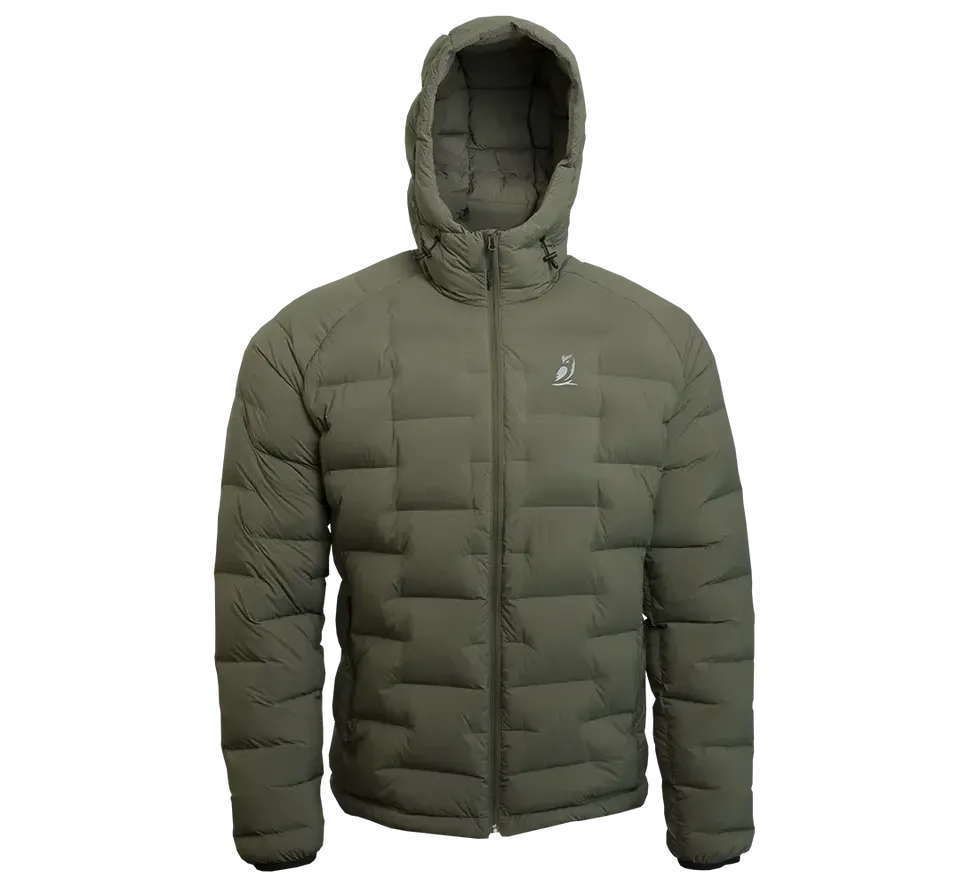
The Outdoor Vitals Vantage Alpine Down Jacket is built specifically for those cold, exposed moments above treeline when you need substantial insulation but still care about every ounce in your pack. It combines 850-fill ExpeDRY down with a generous 203 grams of fill in a men’s medium, while keeping total jacket weight to just 15.2 ounces. That’s an impressive amount of insulation for the weight and makes the Vantage particularly compelling for high-elevation hiking, cold backpacking trips, chilly mornings, and long stops where staying warm matters more than breathability.
The other standout is Outdoor Vitals’ Zero Stitch construction, which creates the down chambers without traditional stitched-through seams. Outdoor Vitals says this makes the jacket 40% more wind resistant than conventional stitched down puffies while also helping keep moisture, dust, and other contaminants away from the insulation. The ExpeDRY down is designed to dry quickly and recover loft in damp conditions, and thoughtful alpine details include a two-way adjustable hood, insulated zippered pockets, internal drop pockets, and an adjustable hem. For hikers who want serious warmth-to-weight performance rather than the absolute lightest puffy possible, the Vantage is one of the more interesting technical down jackets for 2026.
Best for: High-elevation hiking, cold-weather backpacking, exposed terrain, and stationary warmth
Why We love it: A whopping 203 grams of 850-fill down at just 15.2 ounces, plus excellent wind resistance
Finding the Perfect Down Jacket
Finding the best down jacket for hiking is about more than simply choosing the warmest option. The right jacket depends on where you hike, the temperatures you expect, how much weight you’re willing to carry, and whether the jacket will primarily serve as an active layer or something you throw on when you stop moving. Fill power, fill weight, weather resistance, and responsible sourcing are some of the most important factors to understand before you buy.
Fill Power
Fill power measures the loft and quality of the down insulation. The number-typically somewhere between 600 and 1,000 for outdoor jackets -describes how much volume one ounce of down occupies under standardized testing conditions. Higher-quality down creates more loft and traps more insulating air for its weight.
That means a jacket using 900-fill down can potentially achieve the same warmth with less down than one using 650-fill down, making high-fill-power insulation especially valuable for hikers and backpackers concerned about weight and packability.
One important distinction: higher fill power does not automatically mean a warmer jacket. The total amount of down in the jacket matters too, which is why you should consider fill power and fill weight together.
What Do the Fill Power Numbers Mean?
- 900–1,000+ fill: Premium down offering exceptional loft, compressibility, and warmth-to-weight performance.
- 800–850 fill: High-quality down commonly found in premium hiking and backpacking jackets.
- 700–750 fill: Good-quality down that can provide excellent warmth but generally requires more insulation to achieve the same performance as higher-fill down.
- 600–650 fill: More commonly used when low weight and maximum compressibility aren't the primary priorities.
Expert Advice: Keeping down clean helps it maintain its loft. Dirt, body oils, and sweat can eventually cause down clusters to clump together and reduce performance. I use Nikwax Down Wash when my down gear actually needs a wash, but don't wash a down jacket unnecessarily. Always follow the manufacturer's care instructions.
Fill Weight
If fill power tells you how efficient the down is, fill weight tells you how much down is actually inside the jacket.
Fill weight is usually given in ounces or grams and is one of the most useful specifications when you're trying to determine how warm a down jacket might be. Two jackets can both use 800-fill down but provide dramatically different levels of insulation if one contains substantially more of it.
This is particularly important when comparing ultralight jackets. A jacket with premium 900-fill down sounds impressive, but if it contains very little down, it may still be designed primarily as a lightweight three-season layer rather than a genuinely warm winter jacket.
Unfortunately, manufacturers don't always publish fill weights, which can make direct comparisons difficult. Construction, baffle design, fit, shell fabrics, and down distribution also influence real-world warmth.
Expert Advice: If you're asking, “Is this down jacket actually going to be warm enough?” look for the fill weight, not just the fill power. Ideally, compare jackets with similar construction using both numbers together.
Water Resistance
Down's biggest weakness has always been moisture. When traditional down becomes saturated, its clusters collapse and clump together, dramatically reducing the loft that provides insulation.
That's where hydrophobic down can help. Hydrophobic down receives a treatment designed to reduce water absorption and help the insulation resist moisture and dry more readily than untreated down. Some hiking jackets also use water-resistant shell fabrics or durable water-repellent treatments to help shed light precipitation.
However, even treated down isn't a replacement for waterproof protection. I wouldn't rely on a down jacket as my primary rain layer. If sustained rain or wet snow is possible, carry a waterproof shell that can be worn over your insulation.
For consistently damp environments, it may also be worth considering synthetic insulation, which generally retains more insulating performance when wet.
Responsible Sourcing and Ethical Down
Because down is an animal-derived material, its sourcing matters. One certification you'll frequently encounter in outdoor gear is the Responsible Down Standard (RDS), which establishes animal-welfare requirements and provides third-party certification through the supply chain.
RDS requirements prohibit practices including live-plucking and force-feeding, while chain-of-custody requirements help ensure certified material can be traced as it moves from farms through processing and manufacturing.
Some outdoor companies use RDS-certified down, while others rely on different traceability standards or recycled down. When comparing jackets, I recommend looking beyond vague claims like “responsibly sourced” and checking whether the company identifies a specific certification or explains how its down supply chain is monitored.
For hikers who care about wildlife, conservation, and responsible outdoor practices, considering where our gear comes from is another meaningful part of choosing what we carry into wild places.
Final Thoughts on the Best Down Jackets for Hiking in 2026
A great down jacket is one of those pieces of hiking gear that earns its place in your pack again and again. Whether you’re starting before sunrise, gaining elevation into colder temperatures, stopping for a windy summit break, or simply dealing with the huge temperature swings that come with hiking in the mountains and desert, lightweight insulation can make an enormous difference in your comfort.
The best down jacket for hiking in 2026 ultimately depends on how and where you plan to use it. Some hikers will benefit most from an ultralight, highly packable jacket that disappears into a backpack until it’s needed, while others need substantially more insulation for winter hiking and genuinely cold conditions. Pay attention to fill power and fill weight together, consider how much weather protection you realistically need, and don't overlook fit, durability, and responsible down sourcing.
Every jacket in this guide has been selected with real-world hiking in mind, and these are the kinds of layers I look for in my own outdoor gear: warm without unnecessary bulk, easy to carry, comfortable on the trail, and dependable when temperatures drop.
Whichever jacket you choose, buy for the conditions you actually hike in, not simply the biggest fill-power number or the lightest weight on a spec sheet. The right down jacket is the one you’ll happily throw in your pack knowing it will be there when the weather changes.
Now get outside, stay warm, and enjoy the trail!
This guide contains affiliate links, which help fund Southwest Hikes. When you click on the links to purchase the gear we get a small commission that goes a long way to creating guides, gear reviews, and content.